Instructor’s
Welcome Message
Hello Everyone, and Welcome to MiraCosta College
Geology 101 Online Course!
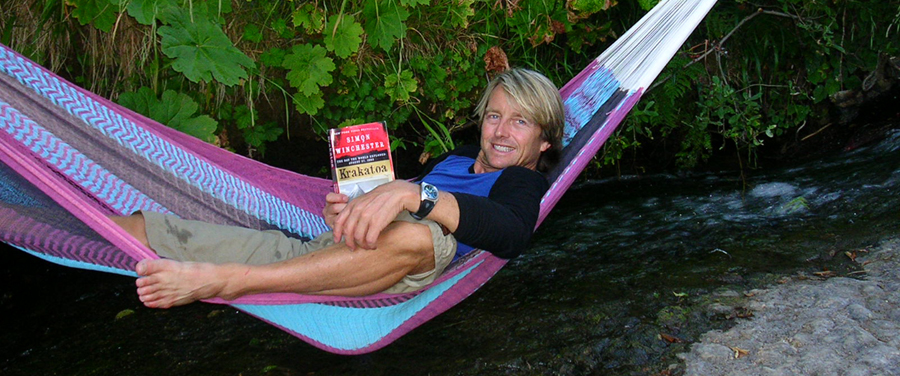
I’m Ray Rector, your instructor.
Congratulations for
signing up for an online earth science course here at MiraCosta College this
summer – you picked a great program!
First off, if you’re taking this course because you think it will
be easier than a traditional course, then think again – it’s really
not. This is a 3-unit,
college-level, physical science course. Since it is offered this summer in a
condensed 6-week format (normal semester is 16 weeks), this means students can
expect to spend around 20 hours per week on the course. Some may complete the
work more quickly, while others may take more time.
This course is ONLY for
people who are comfortable using computers, the World Wide Web, interactive
software, and e-mail. If you
are not already comfortable
using such electronic methods of communication and learning, then this course
is not for you.
Seriously, if this is your first online course, and you are just
starting to learn how to use a computer and navigate the Internet, then this
course will surely kick your butt.
On the other hand, if you are computer and Internet savvy and this is
your first online course, then you may well find that online courses really
work for you – you may just actually really like them!
Here’s how this online course generally works:
1)
The instructor (that’s me!) is primarily a course content facilitator and
learning outcome assessor – I’m here to make sure that you are able
to access all the course content, that you understand how to successfully
complete all the course activities, and finally, grade your assignments and
tests. You and I primarily communicate
via email me using the “Communication” link found on the left-hand
menu on the Blackboard course page.
You can also reach me by calling 760-942-9201 if emailing is not
available.
2)
The student (that’s you!) uses this online classroom platform (Blackboard
software) to learn introductory geology and successfully (hopefully) get
college credit for doing it. To
successfully complete this course you must successfully complete a number of
writing assignments, take several quizzes and exams, and go on a couple of
fieldtrips.
3)
The information (course content) you need to learn in this course is found in
several places: a) your textbook and its accompanying CD, b) instructor lecture
notes, c) instructor’s website links, d) numerous website and online
article links that have been included in the assignment instructions, and e)
direct personal communication with me.
4)
Navigating through our Blackboard 9.1 course site is somewhat simple. When you log on to Blackboard,
you’ll notice that there is a menu on the left side of the course page,
which lists things like "Schedule", "Assignments",
“Quizzes and Exams”, “Fieldtrips” , “Course
Resources”, “My Grades”, “Communication”,
etc. Here are the details for each
menu item:
a) Basic course
logistical information is found at the “Class Start-Up Info”, “Syllabus”
and “Schedule” links.
b)
Geology science curriculum is found in the “Course Resources”
portal, which includes textbook support, professor’s lecture material,
and Internet links.
c)
Assignments are found in the “Assignments” link. You access assignment instructions
and submit your assignment response from the “Assignments” portal.
d)
Quizzes and Exams are taken through the “Quizzes and Exams”
portal.
e) You have
access to your grades in the course through the “My Grades” link.
f)
All forms of online communication is done via the
“Communication” center.
This is where you email me, the instructor, for all your questions and
concerns. You can also email fellow
classmates. Additionally the “Discussion” link is found there,
which is used primarily as a forum for personal introductions and sharing and
critiquing assignment responses.
The “Discussion” link is also used by students for public or
private discussions concerning course work – primarily students helping
students.
For those students who are new to the Blackboard
online learning platform, a very helpful link to a Blackboard Users Manual is
found in the “Student Tools” link.
5) Your typical work agenda for each week
will include: a) reading up to four chapters in your textbook, b) working
through the textbook’s CD-ROM exercises, c) visiting and browsing several
educational websites, including the “Earth Revealed” streaming
video series, d) reviewing my lecture notes and PowerPoint presentations, e) completing
one written research assignment, and f) taking a couple of quizzes.
6) I personally grade your written research
assignments, whereas the quizzes and exams are automatically graded. Therefore, you get test results back on
the test due date, whereas your submitted written assignments will take longer
for me to grade and get back to you.
Please give me a little patience with getting back your graded written
assignments.
Important Must-Read Documents
Make sure to thoroughly
and carefully read the course syllabus, schedule, and plagiarism
policy.
1) The syllabus is
basically the official course contract between me (the instructor) and you (the
student). This is where all the
course information and logistics are found. Things like textbook information,
how assignments should be
completed, and grading standards are all found in the syllabus.
2) The schedule is, by
far, the most important document during the semester for keeping your studies
on a timely track – things like assignment, test ,
and fieldtrip due dates are all there.
3) My plagiarism policy
is also provided for your benefit as a student. Read and understand it very
carefully. Note that I use
plagiarism detection software like “Turnitin.com” and
“Eve2” on the assignments that you turn in to me.
4)
Assignment and Test taking tips are
found in the Class Start-Up Info folder -- created to help you successfully
complete and submit the assignments, quizzes, and exams.
5) Finally, there is a link to the
official Blackboard User Manual
found in the Class Start-Up Info folder -- created to help you learn how to successfully navigate in the Blackboard
learning platform.
The Written Research Assignments
Writing assignments
are probably going to take the lion’s share of your assessment time in
this class, as an online science class should. Therefore, it is important
that you understand how I would like those assignments completed and submitted
to save you time and trouble. I
give VERY DETAILED instructions on what and how to complete each assignment
within each assignment’s instructions. If you still are unsure of what I am
asking for, do not hesitate to contact me, or another student. But, be sure to clearly articulate your
question or concern first before contacting me.
Each and every
assignment and test has two specific dates: 1) the availability date in
which it becomes available for your inspection and response, and 2) the due
date, in which it is due for grading, which is the same thing as the expiration
date, as it also becomes unavailable for inspection henceforth.
Late assignments and
tests are both unaccepted. Make
sure that you stay on top of ALL due dates (listed in the Schedule).
As a general rule, I
can be contacted by email through the “Communication” link. I will
check messages virtually every day. Alternately, I can be contacted via
traditional email at geoprof@terrasonics.com,
or by telephone at (760) 942-9201. However, unless there is an urgent need to
contact me, I prefer to be contacted via email.
I think that we can
have lots of fun with this course this summer, and that we’ll all learn a
lot too. Let’s make the most of it!
Look forward to meeting everyone.
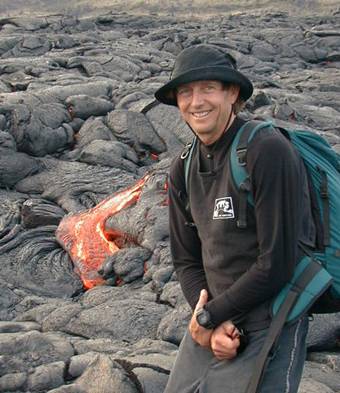
Ray
Rector